Why the Kati Roll Format Works
Six fillings, one griddle, one grill and a roll wrapped in paper. How a Kati Roll store is built to run, piece by piece.
Franchise4 min read
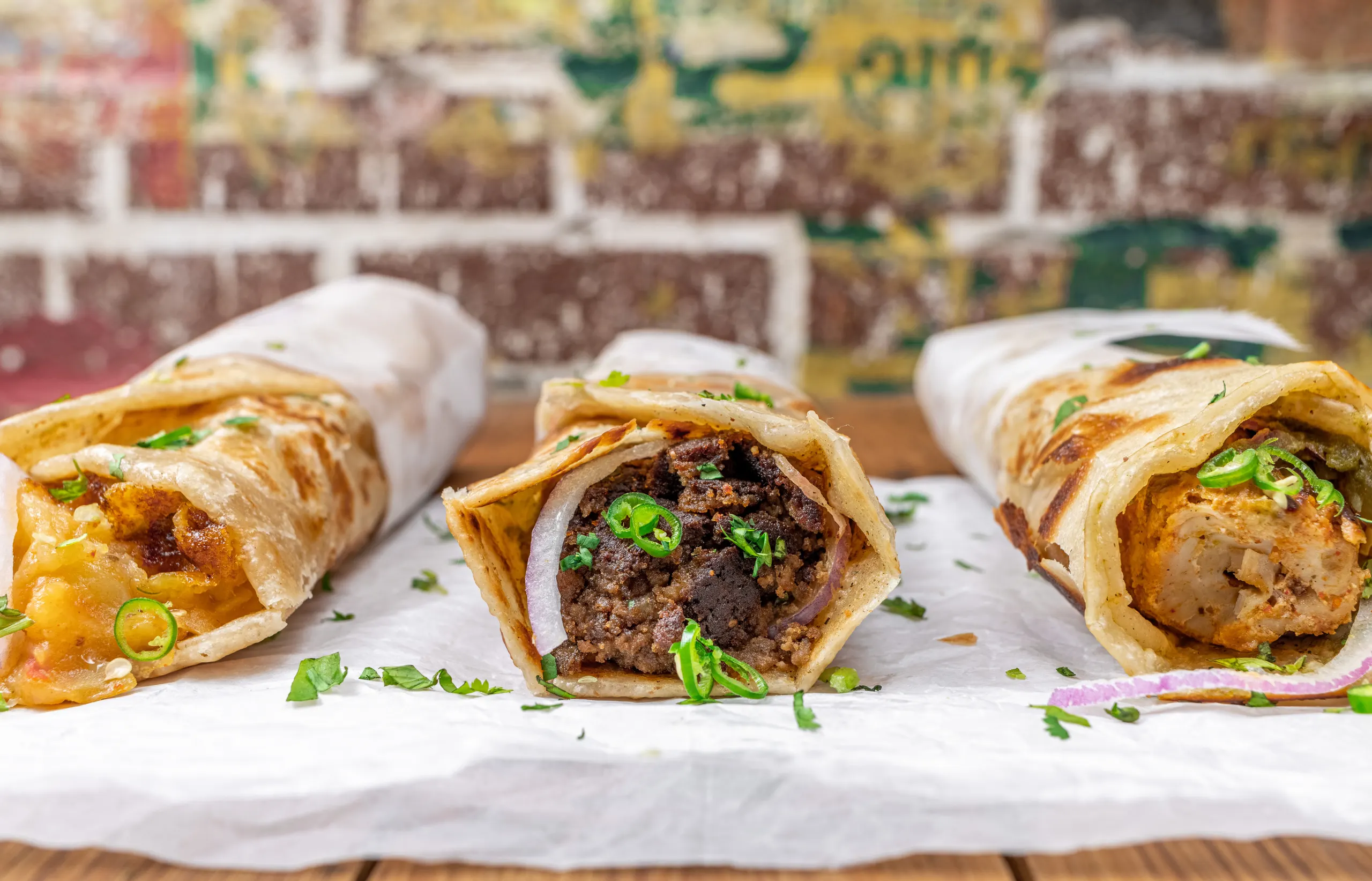
A Kati Roll store is built from a few parts that fit together. The menu is short, the cooking happens on one griddle and one grill, and the roll leaves the counter hot and wrapped in paper. Here is how each piece of the format works, and what it asks of the people who run it.
A short menu, built from shared parts
The menu is rolls, bowls, momos, sides, lassi, drinks and a dessert. At its center are six fillings: Chicken Tikka, Steak Tikka, Shami Kabab, Achari Paneer, Chana Masala and Aloo Masala. Three are meat and three are vegetarian, and every meat is certified halal.
Those six fillings do most of the work. Each goes into a roll on paratha or roti, and each can also be made unda, on a flatbread layered with freshly beaten egg. That turns six rolls into twelve without adding a filling. Add the plain Unda Roll, which is just the bread and the egg, and the board holds thirteen rolls.
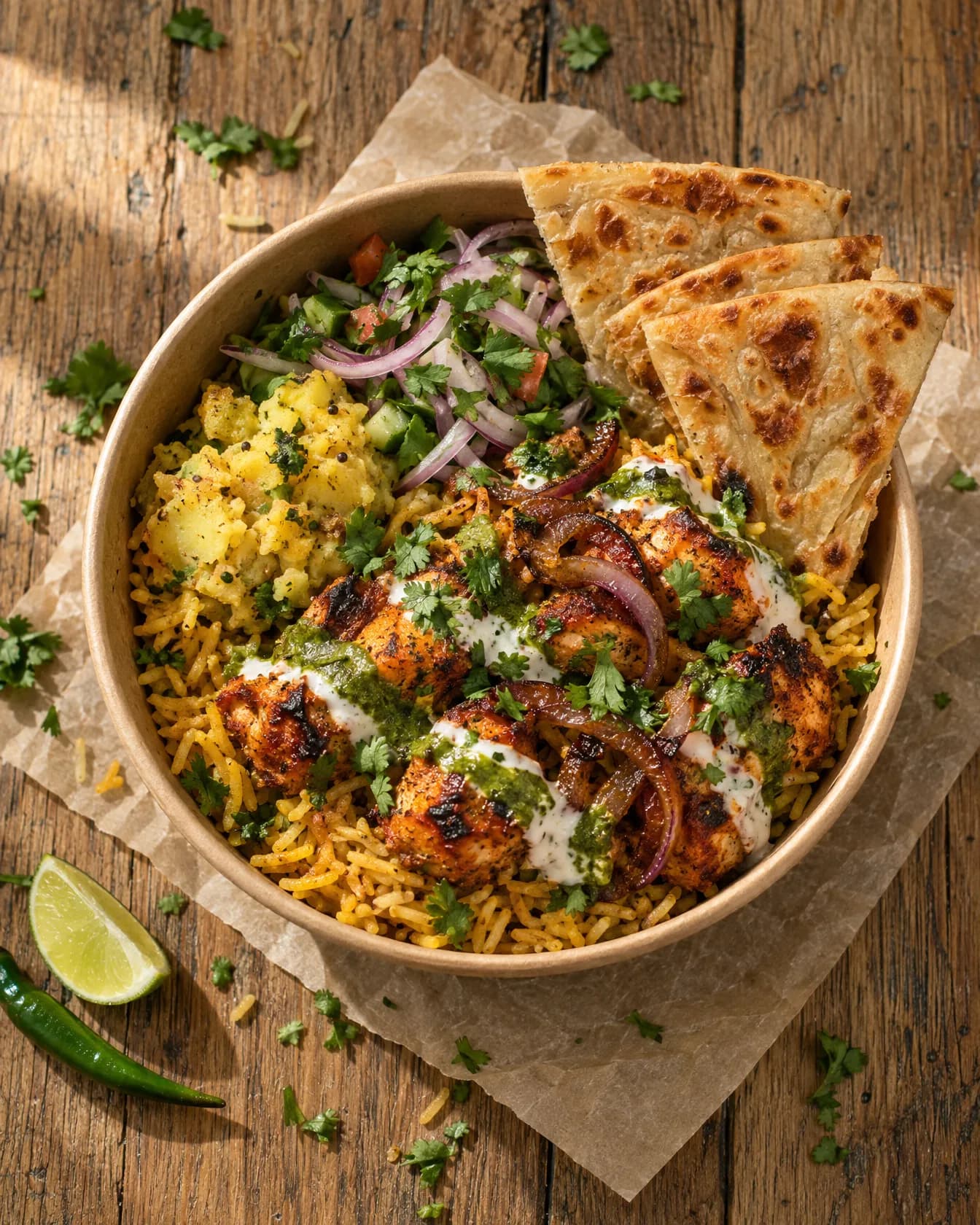
The bowls follow the same logic: they are the roll's fillings, in a bowl. Five fillings go over aromatic biryani rice or into a salad, which makes ten bowls, each with paratha wedges, spicy mashed potato, a salad with lime cilantro dressing, white raita, green chutney and caramelized red onions. The filling, the chutney and the bread are the ones the rolls already use.
One griddle, one grill
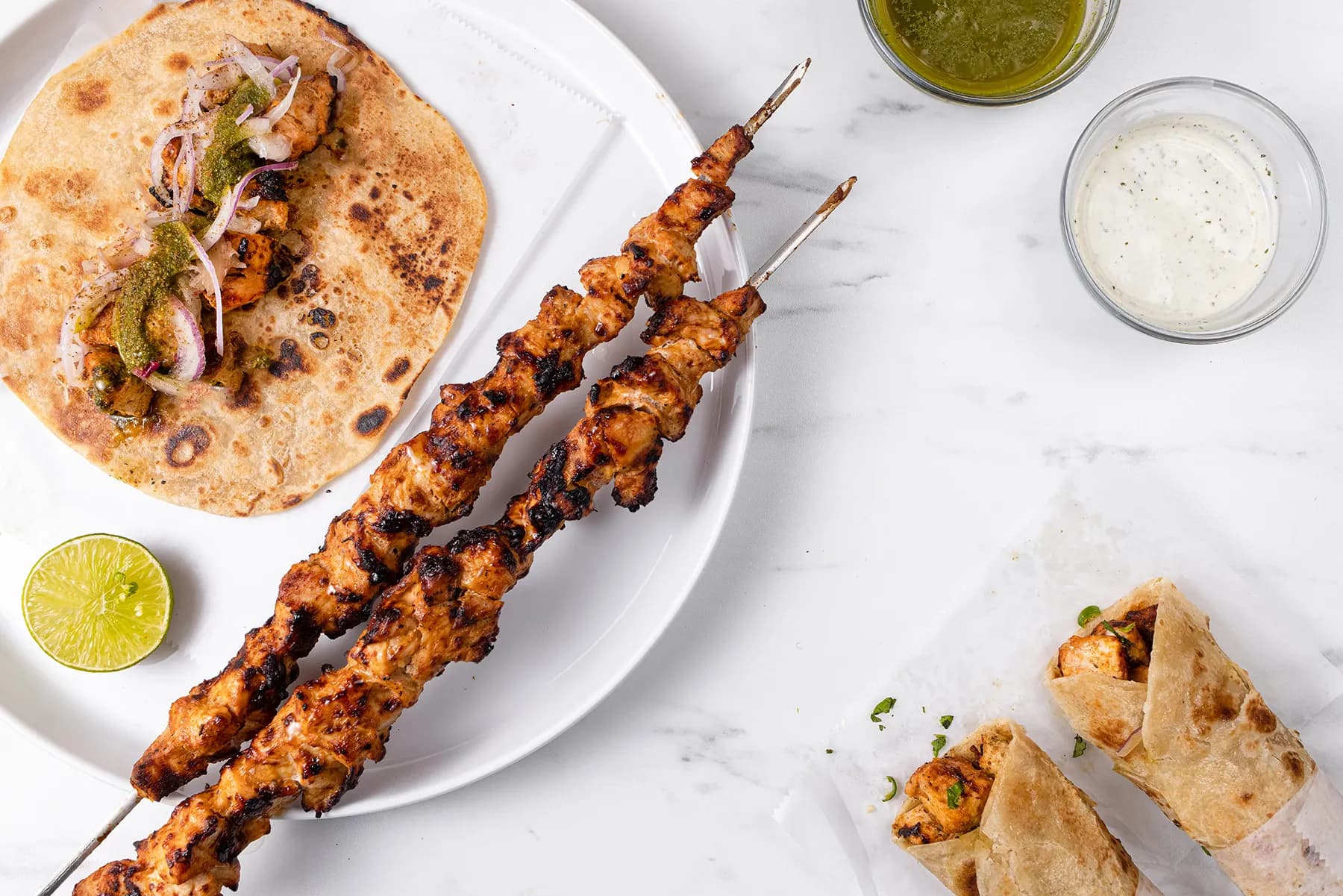
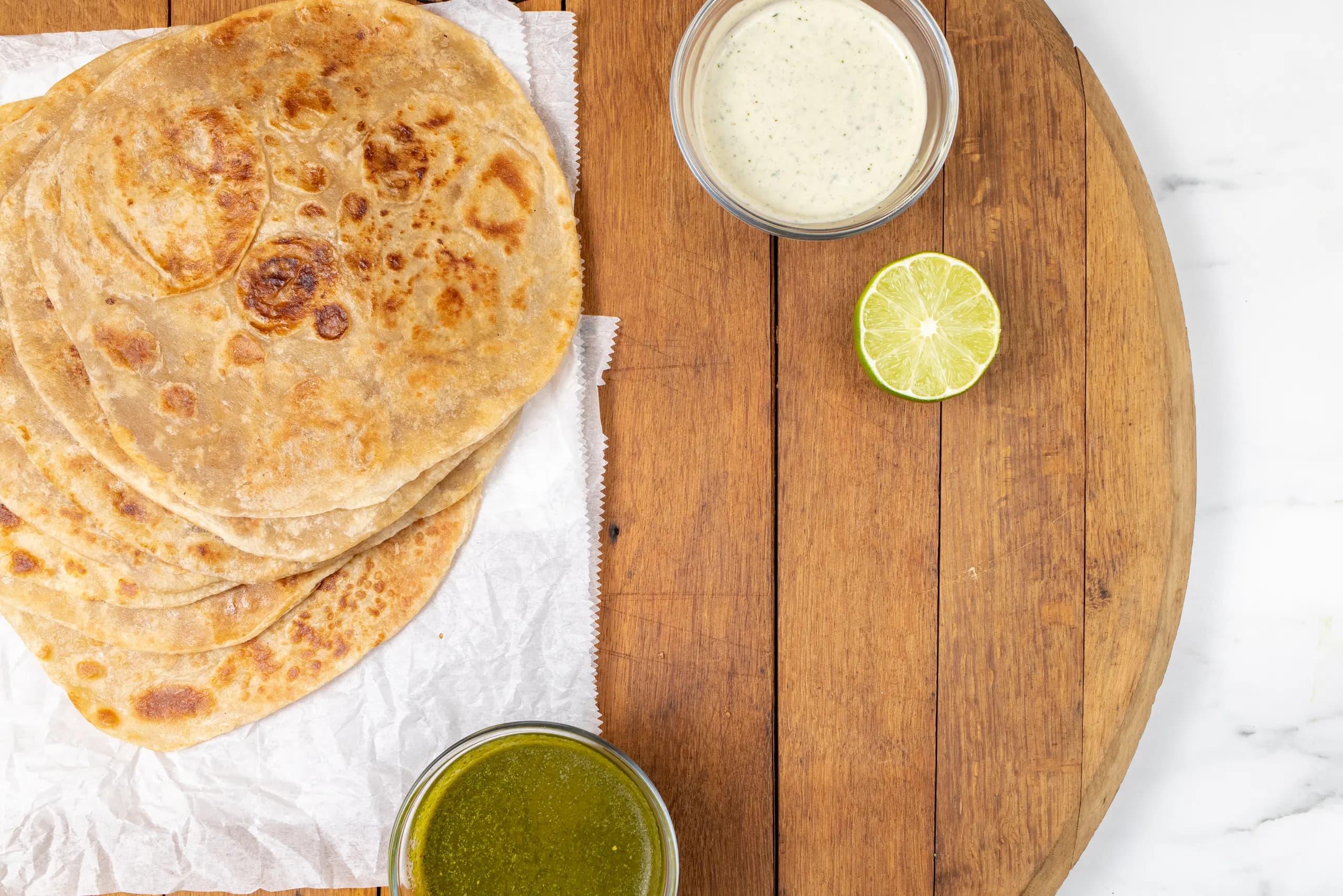
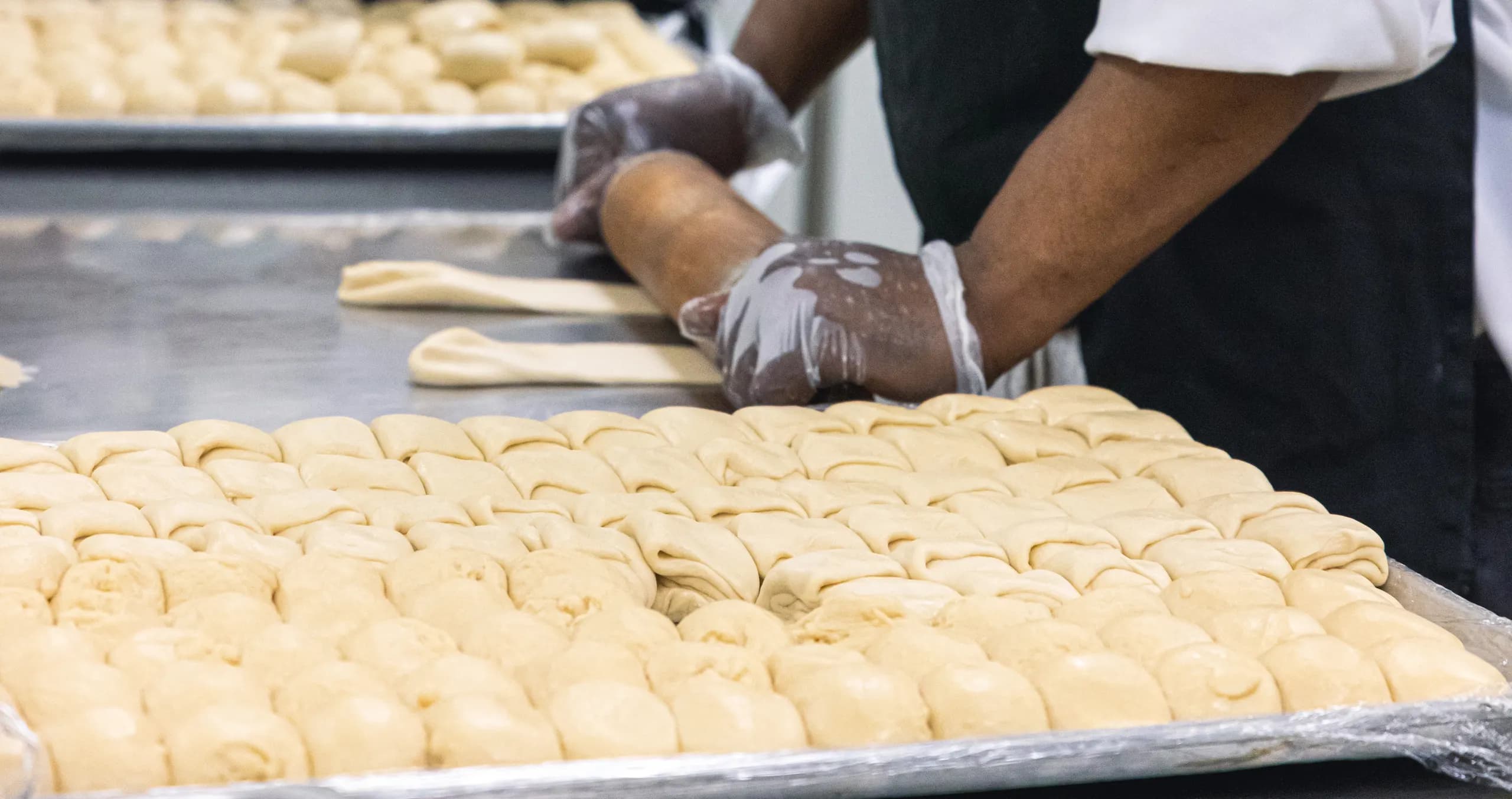
The kitchen is built around two stations. On the grill, chicken, steak and paneer are marinated, threaded on skewers and grilled; the word kati literally means skewer. On the griddle, the bread: paratha is hand-rolled, made with butter, layered and lightly fried on cast iron, and roti is whole durum wheat, roasted on the grill or griddle.
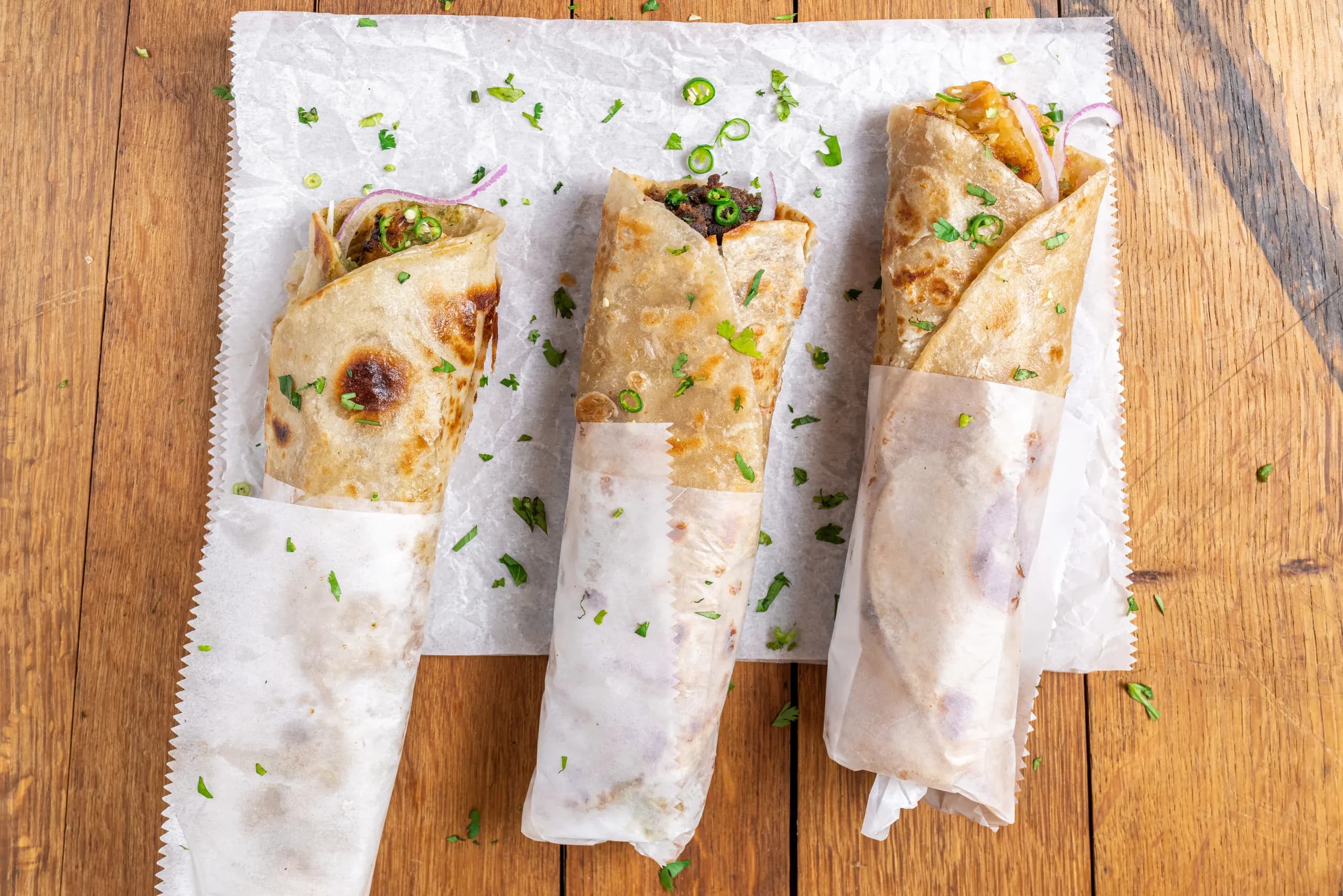
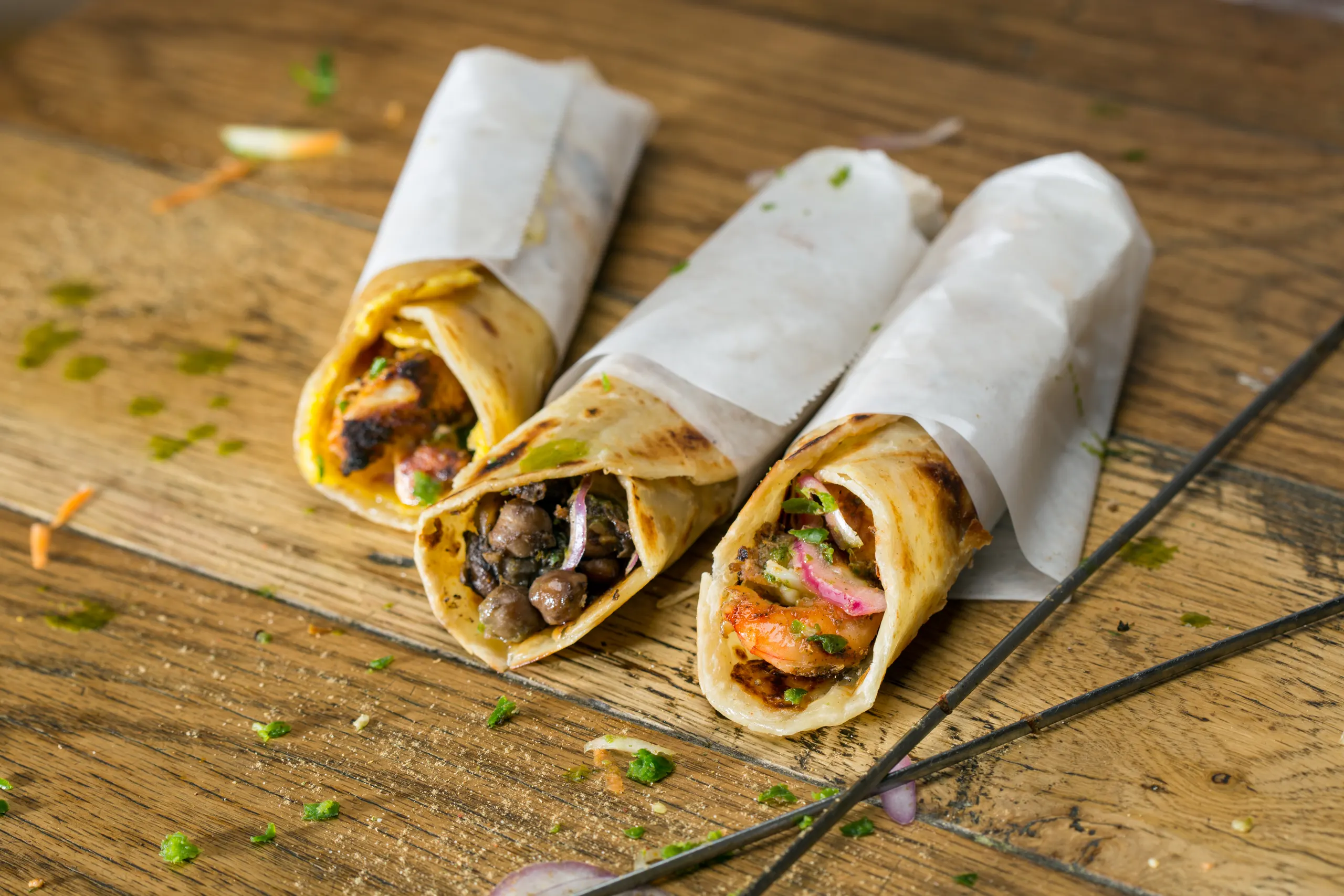
From there, every roll is built in the same five layers, in the same order: the bread, the filling, lime-cilantro chutney, a medley of sautéed, pickled and fresh onions, and a sprinkle of chaat masala. You can see each layer in what a kati roll is.
Fresh every day, with the hard parts made for you
Prep runs every day. We marinate every filling daily, never use pre-packaged foods or sauces, and make the lime-cilantro chutney fresh daily. Our Story calls it food made fresh every day by hand.
The parts that are hardest to get right come from us. Our spice blends, sauces and breads ship from our kitchen, and the marinades start from a proprietary blend of up to 30 hand-ground spices. Halal, antibiotic-free meats come from suppliers we approve. A partner's crew cooks and builds the roll from those parts.
Wrapped to go, served every way
A kati roll comes hot, wrapped in paper, made to be eaten on the go. That shape is why the food travels. The same roll works at the counter, at a table, in a pickup bag or on a delivery run, so customers can dine in, pick up or get it delivered. Partners get POS, online ordering and digital loyalty set up for them.
Convenient, customizable, portable and unintimidating, it is essentially an Indian burrito.
Nation's Restaurant News named The Kati Roll Company one of its Breakout Brands that year. The same portability carries over to group orders, and our catering post explains how catering works.
Lunch to late night, set by the block
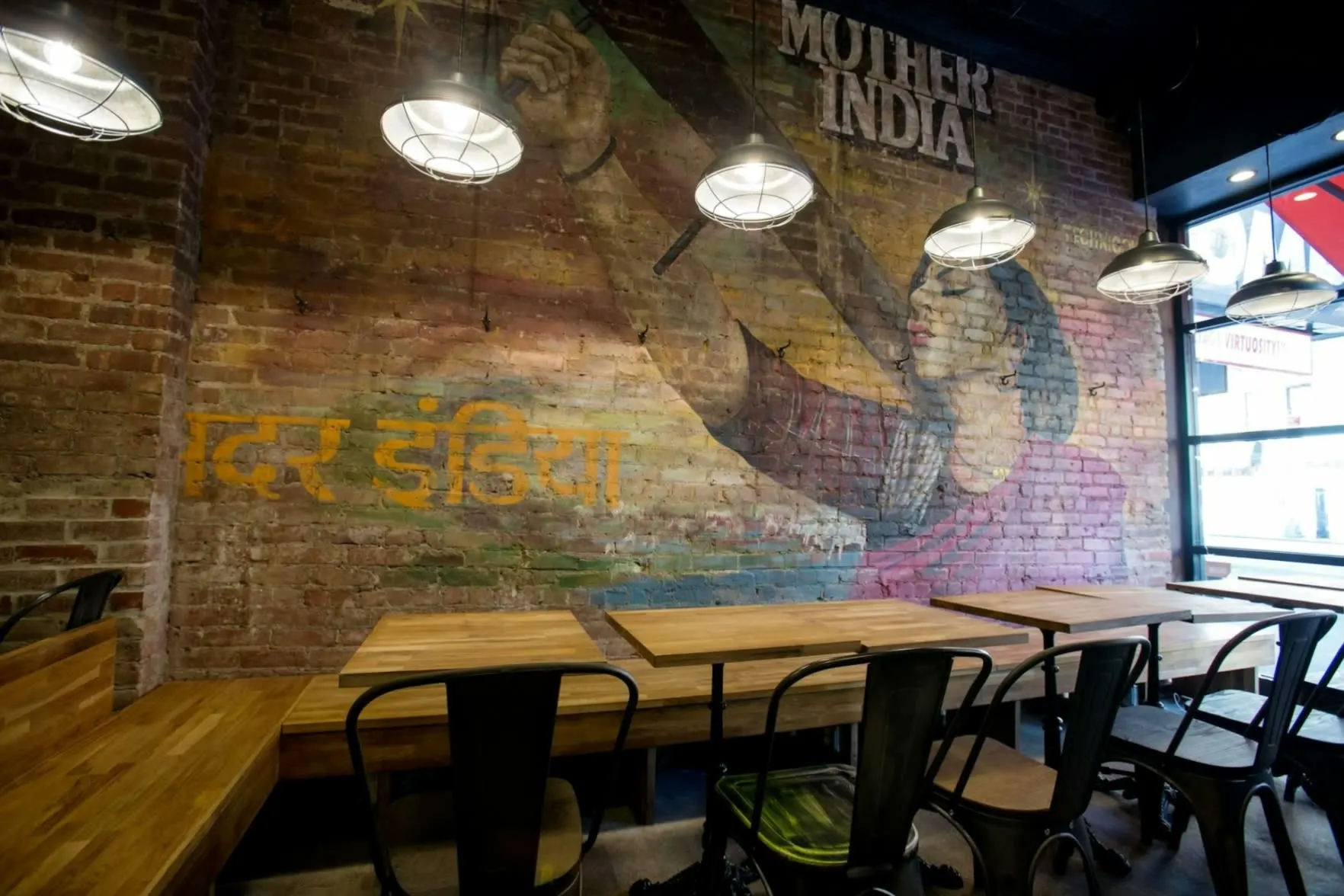
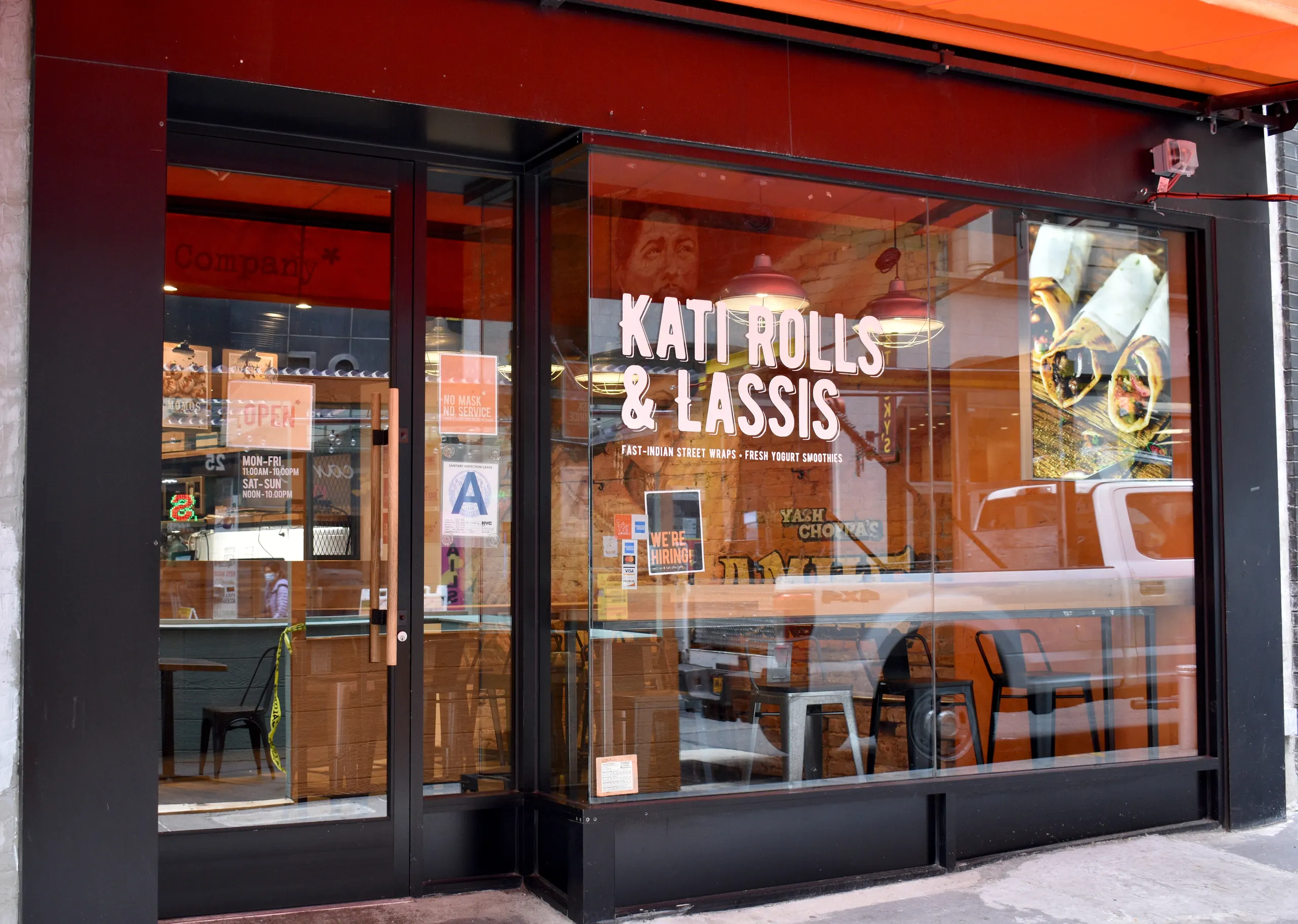
Hours follow the neighborhood, and the format bends with them. World Trade, on Maiden Lane in the Financial District, is built for lunch and an early dinner and closes at 8pm. MacDougal Street stays open until 3am on Friday and Saturday nights. In Texas, Dallas and Plano open at 11am and run until midnight on Fridays and Saturdays.
Room size flexes too. The first store on MacDougal Street opened in 300 square feet. Dallas, our first franchise store, is 2,200 square feet with seats for up to 50, downtown, where Local Profile noted in 2024 that the store is popular with office workers and trades mainly in the daytime.
- 6Fillings behind 13 rolls and 10 bowls
- 30Hand-ground spices, at most, in our blend
- 2,200Square feet in Dallas, with up to 50 seats
What the format asks of a partner
What the format asks of a partner is consistency: the same five layers on every roll, fresh prep every day, and a menu that stays the menu. Partners do set their own prices, with our guidance on a pricing structure for their location.
If the format fits the way you like to run a restaurant, the next questions are who we look for and how we help. Start with what it takes to own a Kati Roll, then read how we train and support our partners. The investment, the support and the path to opening are all on our franchise page.
This post is not an offer to sell a franchise. An offer is made only by a Franchise Disclosure Document delivered in accordance with applicable law.
The Franchise Guide
The Kati Roll Franchise Guide
What owning a Kati Roll asks of you, what it costs, how a store opens and who it suits, in the order owners ask.
You are on part 2 of 11. See every franchise post
- What It Takes to Own a Kati Roll
- Why the Kati Roll Format WorksReading now
- What a Kati Roll Franchise Costs
- How We Train and Support Our Partners
- From Inquiry to Opening
- Kati Roll Franchise Questions, Answered
- A Second Brand for Restaurant Operators
- Owning a Kati Roll as a First-Time Owner
- Owning a Kati Roll With Family or a Partner
- Where Kati Roll Is Growing
- Why We Started Franchising
Keep reading
More from the blog
 Franchise
What It Takes to Own a Kati Roll
Who we look for, the time and capital it takes, and what a Kati Roll partner does all day, from the morning marinade to the late line.
 Franchise
How We Train and Support Our Partners
What we do before you open, on opening day and after: the site and the build, training, recipes and supply, technology, marketing and operations.
 Food
What Is a Kati Roll?
Kolkata street food in five layers: paratha, a skewer-grilled filling, lime-cilantro chutney, onions and chaat masala. Here is how each one works.
Franchise
Own a Kati Roll.
Twenty-four years on MacDougal Street, now opening in new cities with a few great operators. See the investment, the support and the path to opening.