Paratha or Roti?
Every kati roll comes on one of two hand-rolled breads. Here is how each is made, how they differ, and how to choose yours at the counter.
Food3 min read
The first question at our counter is not the filling. It is the bread. Every roll on the menu comes on your choice of two hand-rolled flatbreads, paratha or roti, and the one you pick changes the roll more than most people expect.
Both are made by hand in our kitchens. Both carry the same fillings, the same lime-cilantro chutney and the same onions. But they are built differently, cooked differently and eat differently, so it is worth knowing what you are choosing.
Paratha, the traditional choice
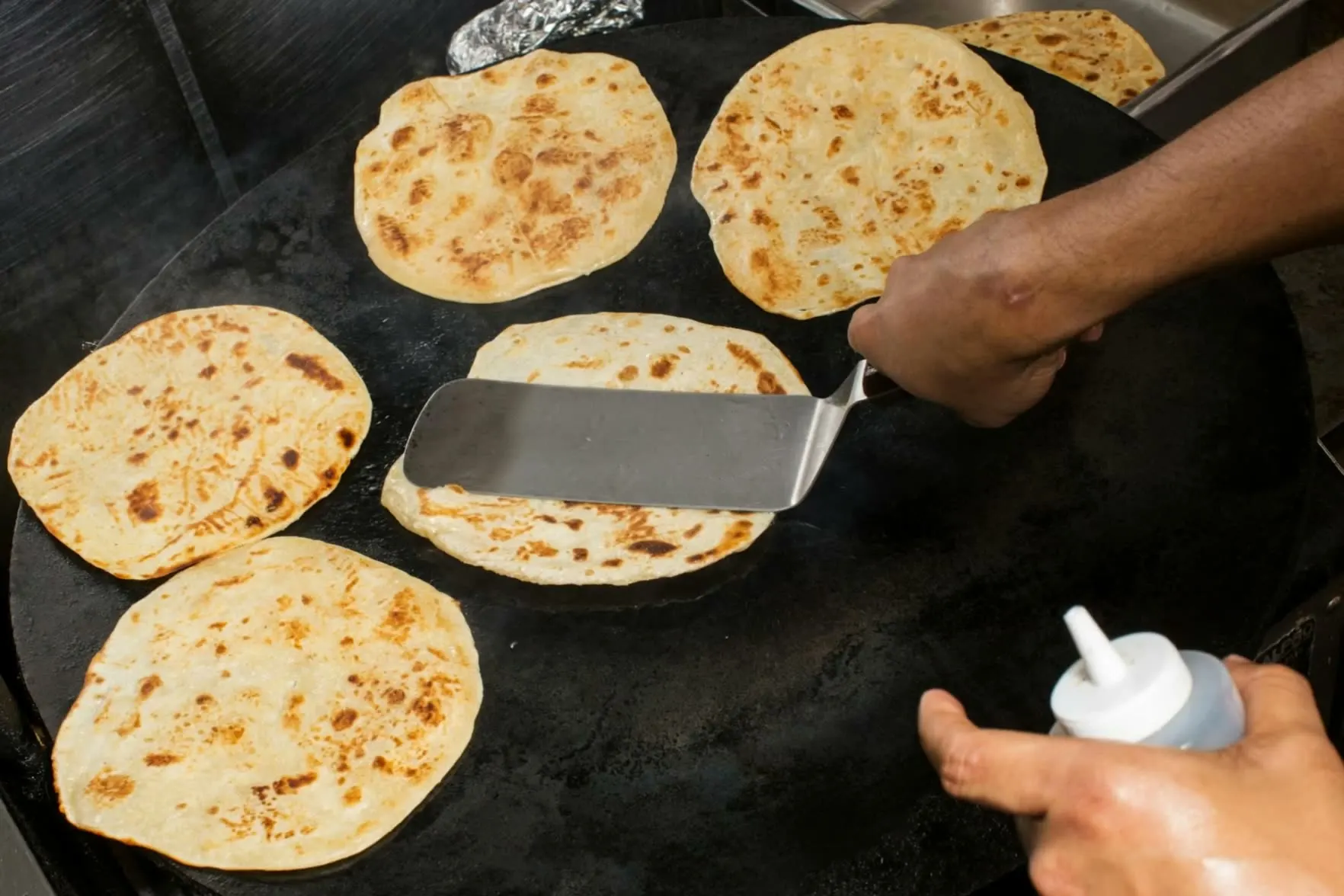
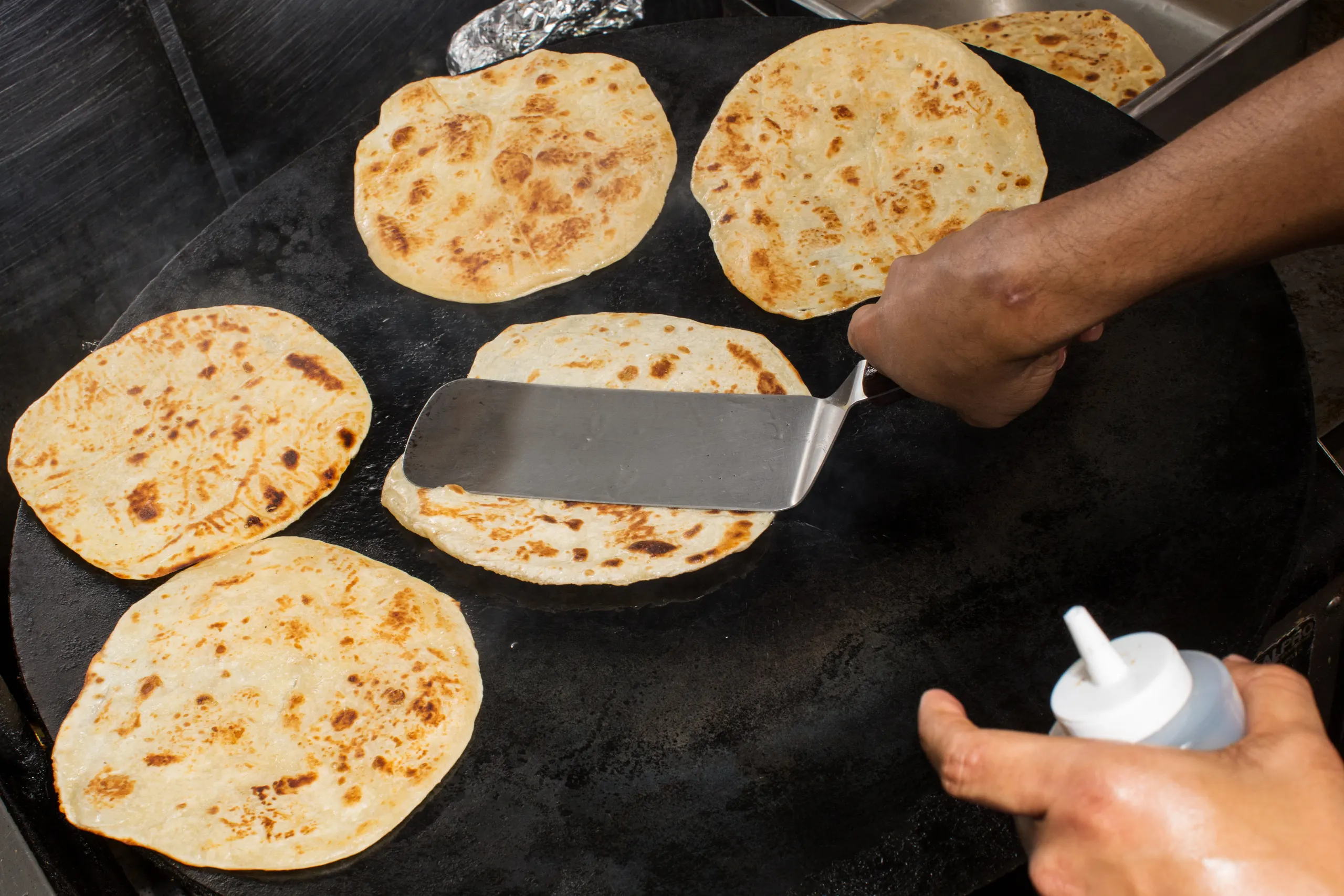
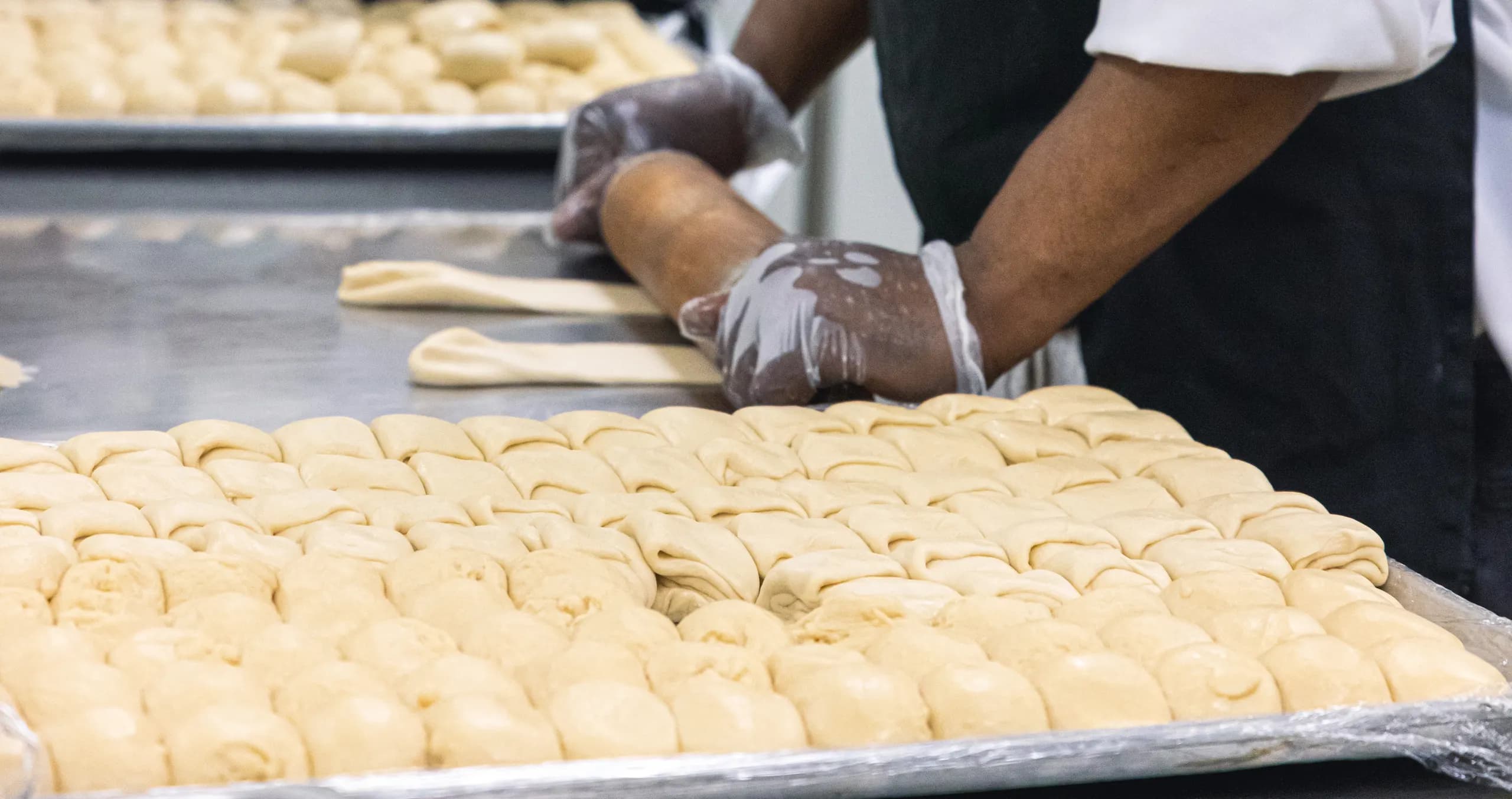
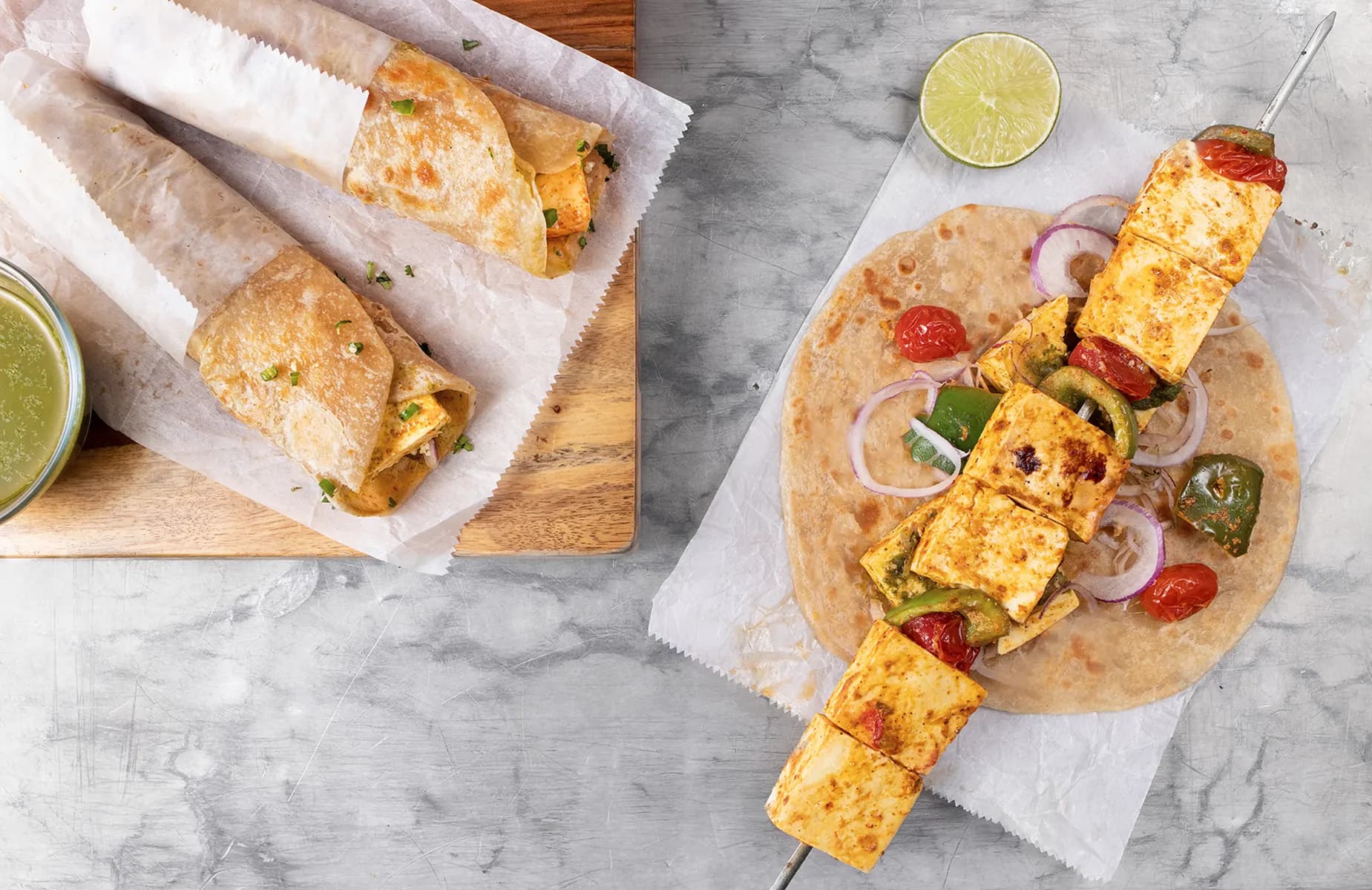
Kati rolls are traditionally served in a paratha, and on the streets of Kolkata that is what a kati roll is wrapped in. A paratha is a layered flatbread. The dough is rolled out by hand, made with butter, and built up in layers before it goes onto a cast-iron griddle, where it is lightly fried.
The butter and the griddle are where the richness comes from. When our own story describes the kati roll as skewer-grilled fillings in buttery paratha, this is the bread it means.
The egg-layered paratha
There is a third bread hiding on the menu. Every unda roll is made on a flatbread layered and grilled with freshly beaten egg, so the egg becomes part of the wrap. Order the Unda Roll on its own, or pick the unda version of any filling, from the Unda Chicken Roll to the Unda Aloo Roll.
Roti, the lighter choice
Roti is made from whole durum wheat. It is rolled by hand like the paratha, but instead of being layered and fried, it is roasted on the grill or griddle. The result is a lighter bread that is still full of flavor.
Roti has one more thing going for it: it is vegan. Our parathas are made with butter, so if you eat vegan, ask for the roasted whole wheat roti. Then ask the team at the counter which fillings fit how you eat.
The difference, side by side
- Dough: paratha is made with butter; roti is made from whole durum wheat.
- Build: paratha is layered; roti is rolled and roasted as it is.
- Cooking: paratha is lightly fried on a cast-iron griddle; roti is roasted on the grill or griddle.
- Eating: paratha is richer and more buttery; roti is lighter.
- Diet: roti is vegan; paratha contains butter.
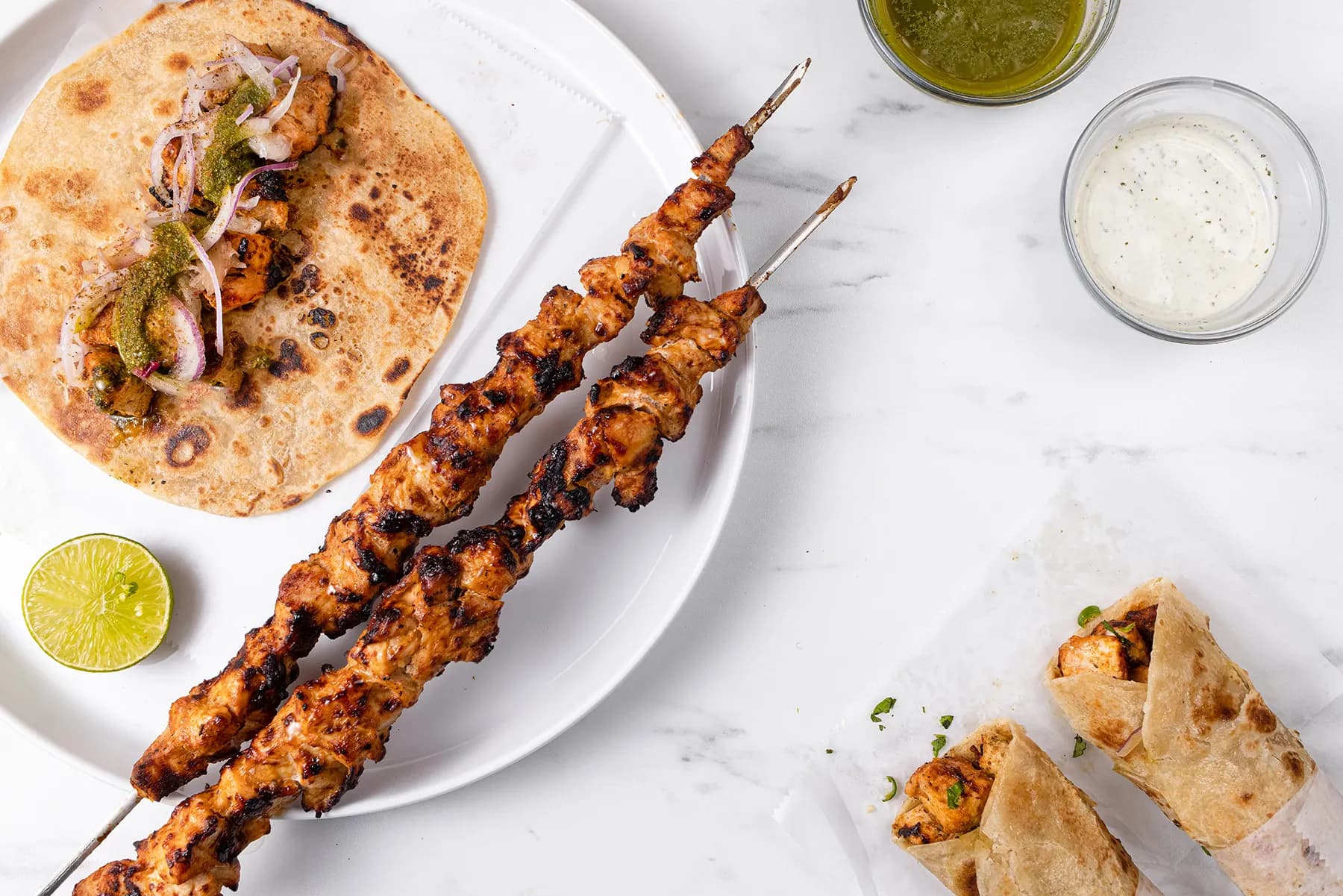
Whichever bread you pick, the finish is the same: our lime-cilantro chutney, made fresh every day with limes squeezed and cilantro chopped by hand, a medley of sautéed, pickled and fresh onions, and a sprinkling of our own chaat masala. Vegetarians can have the Achari Paneer, Chana Masala and Aloo Masala fillings on either bread.
How to choose
If it is your first kati roll, have it on paratha. That is the roll Payal Saha missed when she moved from Kolkata to New York, and it is the one she built the first store on MacDougal Street to make. Start with a Chicken Tikka Roll or an Achari Paneer Roll, the traditional way.
On your next visit, order the same filling on roti. It is the simplest way to taste what the bread is doing, because everything else stays the same: the marinade, the grill, the chutney, the onions and the chaat masala on top. After that, the bread is yours to choose, roll by roll.
Paratha beyond the roll
The paratha shows up in other places on the menu too. Every one of our bowls comes with paratha wedges on the side, for scooping up the biryani rice, the spicy mashed potato and the raita. And if one bread is not enough, order Breads as a side: an order of paratha or roti, on its own.
- 2Hand-rolled breads, on every roll
- 13Rolls on the menu, from Chicken Tikka to Unda
Whichever bread you choose, it is rolled, griddled or roasted, filled and wrapped while you wait. That is the whole idea of a kati roll: street food, made fresh, handed over hot.
Keep reading
More from the blog
 Food
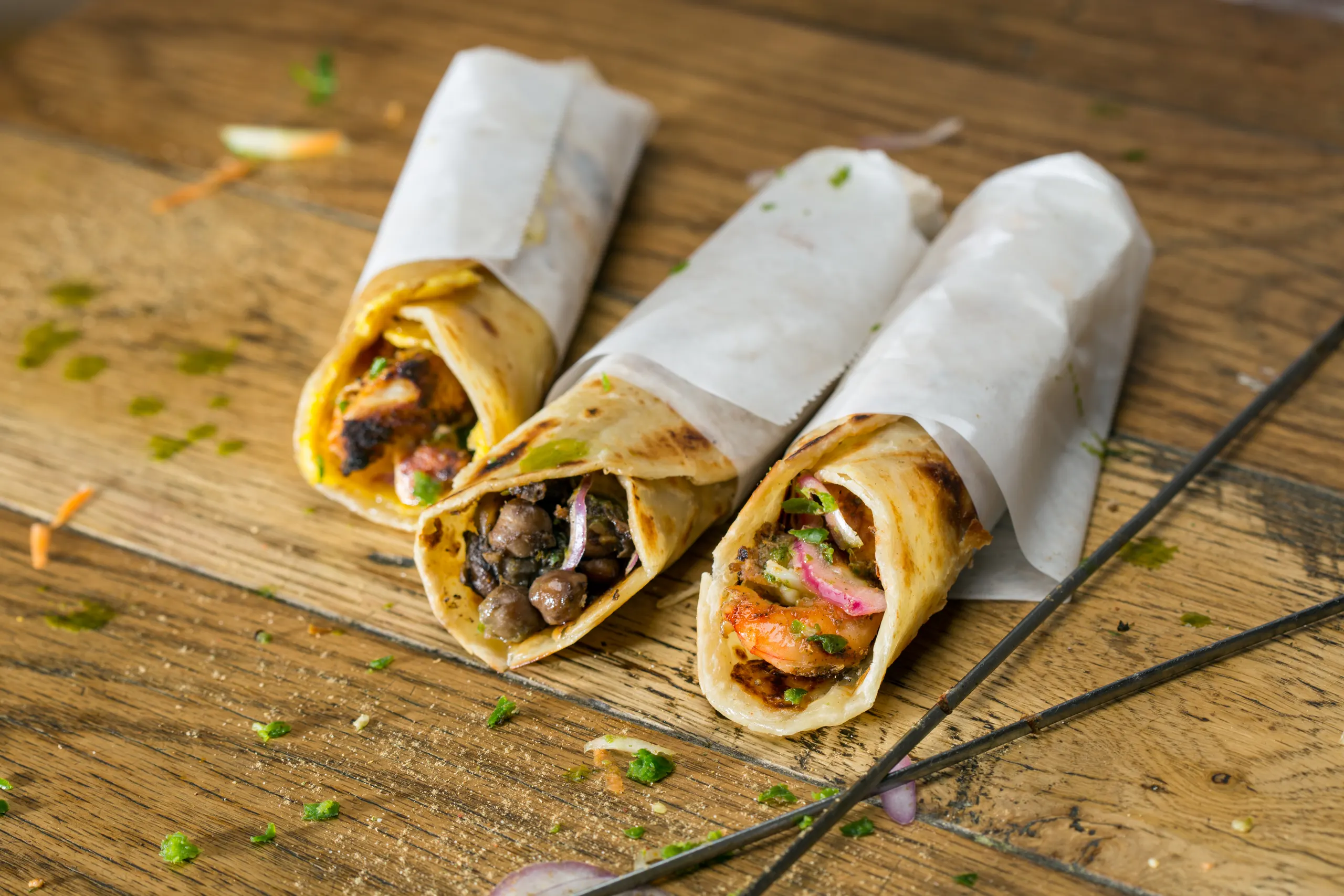
What Is a Kati Roll?
Kolkata street food in five layers: paratha, a skewer-grilled filling, lime-cilantro chutney, onions and chaat masala. Here is how each one works.
 Food
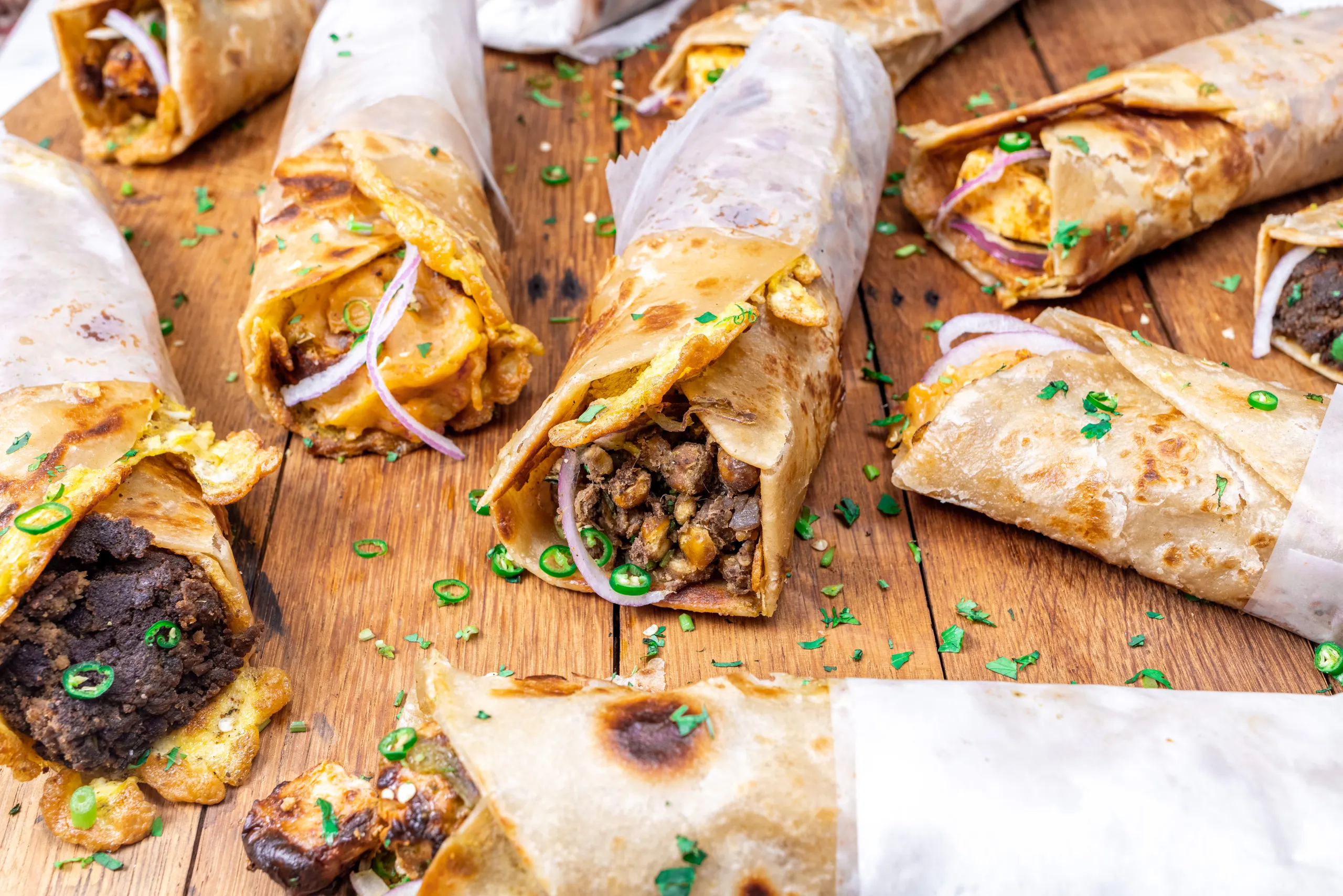
A First-Timer's Guide to the Menu
Where to start at Kati Roll: the classic rolls, vegetarian and vegan picks, halal meats, bowls, momos, lassi and the cake bite to finish.
 Our Story
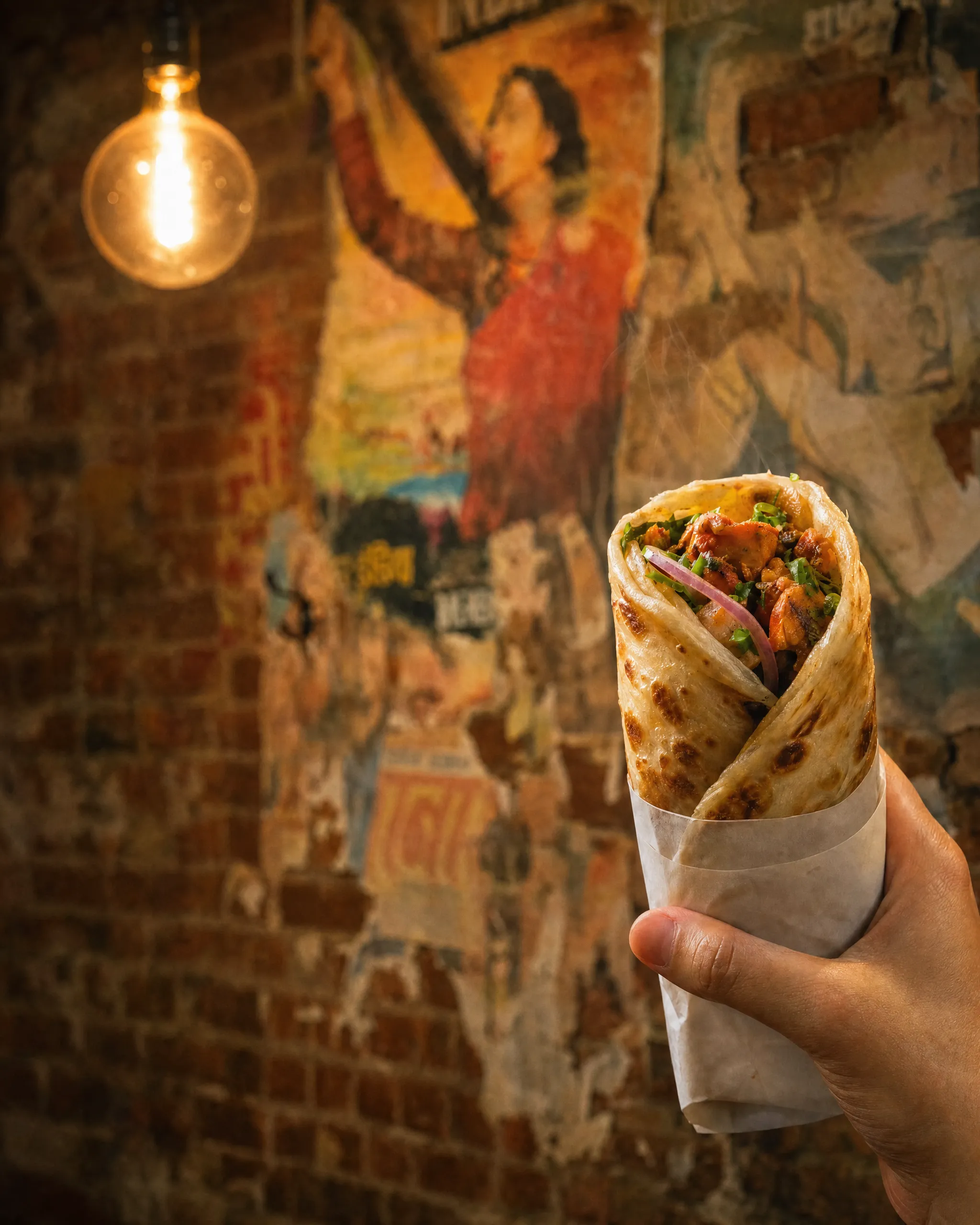
From Kolkata to MacDougal Street
In 2002 Payal Saha opened a 300-square-foot shop in Greenwich Village to make the street food she missed. This is how the first store worked.
Order ahead
Come get one hot.
Order ahead from the store nearest you, or walk in. Dine in, pick up or get it delivered.
Thinking about owning one? Read What It Takes to Own a Kati Roll